Why does my AC smell like mildew when it turns on
That musty blast when your AC kicks on is mold growing inside the system. Here's why it happens in Lake Worth Beach and how to get rid of it for good.
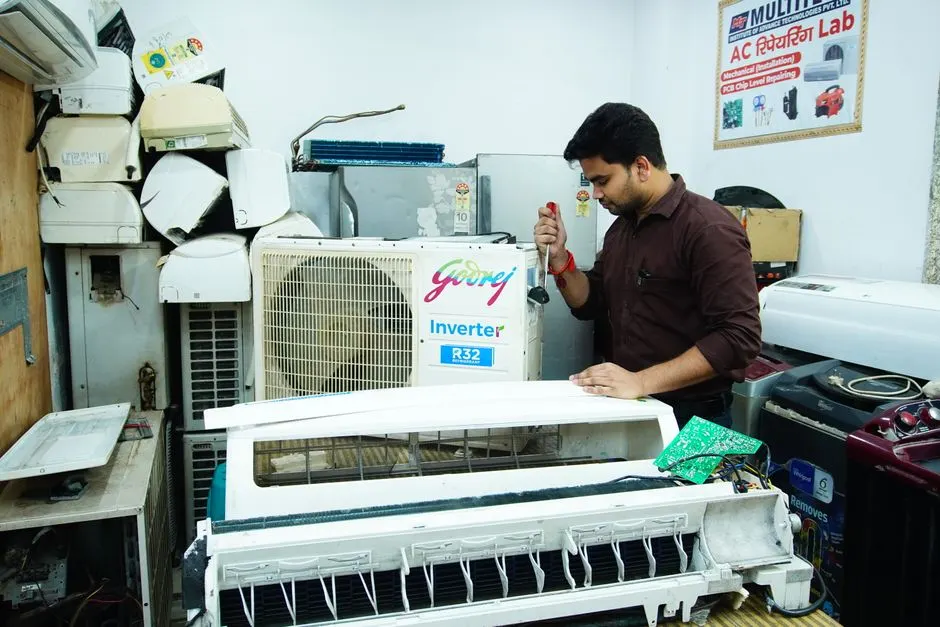
Your AC smells like mildew when it turns on because mold and mildew are growing on the evaporator coil, in the drain pan, or inside the ductwork - and every time the blower kicks on, it pushes those spores into your living space. In Lake Worth Beach, the combination of year-round humidity, salt air, and AC systems that run 9 to 10 months a year creates near-perfect conditions for that growth. This article breaks down the six causes we see most often, how to tell whether the smell is dangerous, what you can fix yourself, and when it's time to bring in a mold remediation company.
Why does my AC smell like mildew when it turns on in Lake Worth Beach Florida?
Why does my AC smell like mildew Lake Worth Beach Florida homeowners ask us about almost every week? Because your air conditioner is a giant dehumidifier, and dehumidifiers grow mold when they aren't maintained. The evaporator coil stays wet while the system runs. When the thermostat cycles off, that coil sits in a dark, sealed air handler cabinet at 75 to 80 degrees with 70%+ relative humidity. That is a mold incubator.
Mold needs three things: moisture, organic dust, and temperatures between 60 and 85 degrees. Your air handler supplies all three. The dust that slips past your filter settles on the wet coil and becomes food. Within 24 to 48 hours of continuous moisture, mold colonization begins. Within a week, you smell it.
This is why the smell is strongest in the first 30 to 60 seconds after the system starts. The blower is pushing air across a colonized coil and releasing spores that settled overnight or during the off-cycle. Once air has been moving for a few minutes, the concentration drops and your nose adjusts. The smell didn't go away - you just stopped noticing it.
The 6 most common causes of AC mildew smell in Lake Worth Beach
We've inspected hundreds of air handlers from Bryant Park to the College Park neighborhood, and the same six problems come up again and again.
1. A clogged condensate drain line
Your AC pulls 5 to 15 gallons of water out of the air every day during a Lake Worth Beach summer. That water drains through a 3/4-inch PVC line to the outside. When algae, dust, or insects clog it, water backs up into the drain pan and sits there. Standing water plus warm air equals mildew in 48 hours. If you see water stains on the ceiling near the air handler or the pan is full, this is your problem.
2. A dirty evaporator coil
The coil is the cold, wet surface where condensation happens. When it's coated in dust, the mold has a food source right on the metal. We've pulled coils out of Lake Worth Beach homes that had a visible gray-black biofilm across 40% of the fins. No amount of filter changes fixes that - the coil has to be cleaned or replaced.
3. A wet or moldy blower wheel
The blower wheel sits downstream of the coil and pulls air through it. If the coil is producing more moisture than the drain can handle, the blower gets wet. Mold grows on the wheel, and every rotation flings spores into your ductwork. A blower wheel with mold usually has a visible dark film and a musty smell when you open the cabinet.
4. Ductwork that sweats or leaks
In Lake Worth Beach, ductwork often runs through attic space that hits 130 to 140 degrees in July and August. When cool air moves through a duct with failing insulation, the duct sweats. That condensation drips onto the insulation, which stays wet for weeks. Fiberglass duct board is especially prone to mold growth once it's wet - and it can't be cleaned, only replaced.
5. A filter that's past due
A 1-inch fiberglass filter in a Lake Worth Beach home running 10 months a year should be changed every 30 days. A pleated filter can go 60 to 90 days. When you stretch it to 6 months, dust bypasses the filter, coats the coil, and feeds the mold. This is the cheapest fix on the list and the one most homeowners skip.
6. High indoor humidity
If your AC is oversized or short-cycling, it cools the house without removing enough moisture. Indoor humidity above 60% is a mold risk even if the coil is clean. We see this constantly in Lake Worth Beach homes built between 1950 and 1980 with original ductwork and a replacement condenser that's one size too big. A whole-home dehumidifier or a properly sized system solves it.
Is AC mildew smell dangerous in Lake Worth Beach?
Is AC mildew smell dangerous in Lake Worth Beach? It can be, depending on the species and how long you're exposed. The musty smell itself is not toxic - it's microbial volatile organic compounds (mVOCs) that mold releases as it digests dust. But the spores riding along with that smell are a different story.
Common AC mold species include Cladosporium, Penicillium, and Aspergillus. All three are allergenic. In a 2026 study of Florida HVAC systems, researchers found that 60% of units with visible coil biofilm tested positive for at least one toxigenic species. Stachybotrys (black mold) is less common in air handlers but does show up in ductwork that's been wet for months.
Health effects we hear about from Lake Worth Beach homeowners:
- Chronic sinus congestion or post-nasal drip that clears when you leave the house
- Morning headaches that fade by mid-day
- Wheezing or asthma flare-ups, especially in kids
- Itchy, watery eyes and sneezing that don't respond to allergy meds
- Fatigue or brain fog that improves on vacation
If you're healthy and the smell is new, you have time to fix it. If anyone in the home has asthma, a compromised immune system, or is under 5 or over 65, treat it as urgent. We offer emergency mold testing services in Lake Worth Beach, Florida for exactly this situation.
How do I get rid of mildew smell from my AC in Lake Worth Beach?
How to fix AC mildew smell in Lake Worth Beach depends on where the mold is growing. Here's the order we recommend, from cheapest to most involved.
Step 1: Change the filter and check the drain line
Start with a new filter - a MERV 8 pleated filter is right for most homes. Then find the condensate drain line (usually a white PVC pipe near the air handler or outside near the condenser) and pour a cup of white vinegar down the access tee. Wait 30 minutes, then flush with a gallon of water. If water backs up, the line is clogged and needs to be cleared with a shop vac or CO2 cartridge.
Step 2: Clean the drain pan
If the pan has standing water or a slimy film, scrub it with a 1:10 bleach solution or a commercial pan tablet. Dry it completely before you close the cabinet. If the pan is cracked or rusted through, replace it - a $40 part now prevents a $400 ceiling repair later.
Step 3: Inspect the coil and blower
Shine a flashlight at the evaporator coil. If you see gray, black, or white fuzzy growth on the fins, the coil needs professional cleaning. Same for the blower wheel. This is not a DIY job - you can bend fins or unbalance the wheel, and you'll spread spores through the house while you work.
Step 4: Have the ducts inspected
If the smell returns within a few weeks of cleaning the air handler, the mold is in the ductwork. Fiberglass duct board that's been wet has to be replaced. Metal ductwork can be cleaned and encapsulated. We recommend a mold inspection near me in Lake Worth Beach, Florida that includes the air handler, plenum, and all accessible duct runs.
Step 5: Address the humidity source
Cleaning without fixing the moisture is a temporary fix. Add a whole-home dehumidifier set to 50% RH, seal duct leaks with mastic, and make sure your AC is sized correctly. In Lake Worth Beach, we also see moisture intrusion from roof leaks and window flashing that feeds the attic ductwork - that has to be fixed first.
Common mistakes that make AC mold smell worse
We've watched homeowners turn a $400 coil cleaning into a $3,000 duct replacement by making one of these mistakes.
- Spraying bleach into the air handler. Bleach corrodes the coil and blower motor, and it doesn't kill mold on porous surfaces. It just makes the smell worse for a week.
- Running the fan in "on" mode to dry things out. This pulls humid attic air through the system 24/7 and feeds the mold. Run the fan in "auto" only.
- Using a fogger or ozone machine without fixing the moisture. The mold comes back in 10 to 14 days. Every time.
- Painting over moldy drywall or duct board. Encapsulant paint works on clean, dry surfaces. On wet mold, it traps moisture and the mold eats through in 6 to 8 weeks.
- Ignoring the attic. If your ductwork runs through a 140-degree attic with a roof leak, cleaning the air handler won't help. The mold is upstream.
One more: don't assume a new AC unit solves it. We've seen brand-new systems installed in Lake Worth Beach homes where the old ductwork was left in place. The new coil grew mold within 90 days because the ducts were still contaminated.
When to call a professional for HVAC mold smell in Lake Worth Beach
Call a professional when the smell returns after you've changed the filter and cleared the drain, when you can see visible growth on the coil or in the ducts, or when anyone in the home is having health symptoms. Those three situations mean the mold is established, not just starting.
Our team handles the full scope: we inspect the air handler, coil, blower, plenum, and ductwork; we test the air and surfaces to identify species and spore counts; we remove the mold using HEPA vacuuming, dry ice blasting, or fogging depending on the surface; and we verify the work with post-remediation testing. We also coordinate with your HVAC contractor if the coil or ductwork needs replacement.
If you're not sure whether you need a full remediation or just a cleaning, start with a certified mold inspector in Lake Worth Beach, Florida. That inspection tells you exactly what you're dealing with and what it will cost to fix.
Frequently Asked Questions
Why does my AC smell like mildew in Lake Worth Beach Florida?
Because mold is growing on the wet evaporator coil, drain pan, or ductwork. Lake Worth Beach's year-round humidity and 9-to-10-month cooling season keep those surfaces damp, and mold colonizes within 24 to 48 hours of continuous moisture.
Is AC mildew smell dangerous in Lake Worth Beach?
It can be. The smell itself is mVOCs, but the spores it carries are allergenic and sometimes toxigenic. If anyone in the home has asthma, allergies, or a compromised immune system, treat it as urgent and get the system tested within 48 hours.
How do I get rid of mildew smell from my AC in Lake Worth Beach?
Change the filter, flush the condensate drain with vinegar and water, clean the drain pan, and have the coil and blower inspected. If the smell returns within 2 to 3 weeks, the mold is in the ductwork and needs professional remediation.
Who fixes AC mold smell near me in Lake Worth Beach FL?
A licensed mold remediation company that handles HVAC systems. We inspect, test, remove the mold, and verify with clearance testing. Call (833) 929-5837 for a same-day assessment in the 33460 area.
Does homeowners insurance cover AC mold removal in Lake Worth Beach?
Usually only if the mold resulted from a sudden covered peril like a burst pipe or storm intrusion. Long-term humidity or maintenance-related mold is typically excluded. We document the cause and provide a report you can submit to your adjuster.
Get help with Mold Remediation Service in Lake Worth Beach
If your AC smells like mildew every time it kicks on, the mold is already established and it will keep coming back until the moisture source is fixed and the growth is removed. We handle the inspection, testing, removal, and clearance verification for homes and businesses across Lake Worth Beach.
Call (833) 929-5837 today and we'll schedule a same-day or next-day assessment. We'll tell you exactly what's growing, where it is, and what it costs to fix - before we start any work.